Slab leak repair cost: detection, spot repair, or repipe?
Last reviewed 2026-07-22 · pricing data as of 2026-08 · how we build these numbers
Run your own numbers in the whole-house repipe calculator →
A slab leak — a pressurized water line leaking under your home's concrete foundation — is one of the few plumbing problems where the diagnosis costs real money before the repair even starts, and where the wrong repair strategy can double what you spend over a few years. This guide walks through the three cost layers in order: finding the leak, fixing that one leak, and deciding when to stop fixing leaks one at a time and replace the piping instead.
First, confirm you actually have one
Classic signs: a warm spot on the floor, the hiss of running water with every fixture off, damp carpet or cupped wood flooring with no source above, and a water bill that jumped for no reason. The warm spot is the most common tell because roughly four out of five slab leaks are on the hot line, where hot water corrodes copper faster. The free test is the water meter: close every fixture and valve, photograph the meter, wait 30 minutes, and look again. If the dial moved, water is going somewhere.
Layer 1: detection — $125 to $750
A leak-detection visit typically costs $125–$750, per HomeGuide's 2026 figures. The band is wide because it turns on two things: whether specialty acoustic and camera equipment comes out, and whether your plumbing has accessible cleanouts. Behind that bill is a technician's time at billed rates of $45–$200 per hour, plus acoustic listening gear, line pressure testing, and sometimes thermal imaging. Those billed rates run from roughly 1.5x the trade's raw national median wage of $30.67/hour in low-cost markets to 6x and more in high-cost ones, the multiple covering overhead, insurance, profit, and market position.
Do not skip or bargain-shop this step. A leak located to within a foot or two turns the repair into a small, targeted job; a leak located to "somewhere under the kitchen" turns it into exploratory demolition billed by the hour. If your symptom is sewage smell or drain backups rather than a pressurized-line leak, the equivalent diagnostic is a sewer camera inspection, and the failing pipe may be your lateral rather than your supply lines — our sewer line replacement calculator covers that separate problem.
Layer 2: spot repair — $1,600 to $5,000 for a typical tunnel job
Once the leak is marked, there are three ways to fix that one spot, and the access method drives the price more than the pipe work itself:
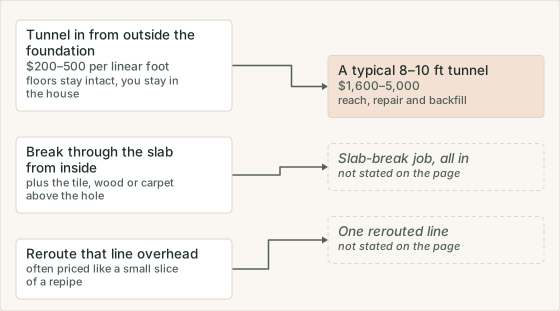
- Tunneling under the slab from outside the foundation runs roughly $200–$500 per linear foot of tunnel. A typical 8–10 ft tunnel to reach a leak, repair it, and backfill lands at $1,600–$5,000. Your floors stay intact and you can stay in the house. The published rate cards behind that band, and why they read low for most of the country, are in the sources at the foot of this page.
- Breaking through the slab from inside — jackhammer, repair, repour — can be cheaper for a shallow leak located precisely near the surface, but the quote must then include replacing tile, wood, or carpet above the hole, which is where this option quietly loses.
- Rerouting the single line — abandoning the leaking under-slab segment and running a new line overhead through walls and attic — avoids concrete work entirely and is often priced like a small slice of a repipe. It is also a preview of the full solution in the next section.
The ugly outlier is old cast-iron drain pipe under the slab: when a corroded cast-iron drain system has to come out through the concrete, projects run $10,000–$30,000 and up, per 2026 industry guides, which is why rerouting and trenchless options exist in the first place.
Layer 3: when the full repipe is the answer
A slab leak on a copper system built in the 1970s–90s is rarely a one-off; it is usually the first pinhole in piping that is failing as a generation. The decision math is blunt. Each spot repair costs $1,600–$5,000, plus a detection visit, plus the days of disruption — and it leaves every other foot of the same aging pipe in service. A whole-house PEX repipe for a 2,000 sq ft, two-and-a-half-bath home runs roughly $7,600–$15,800 including permit; new lines are routed through the attic and walls, so the slab never has to be opened again.
The rule most plumbers will tell you privately: pay for the first slab leak repair, and start pricing a repipe the moment there is a second. Two tunnel jobs plus two detection visits can total $4,000–$11,500 — repipe money spent without getting new pipes. Run your own house through our whole-house repipe cost calculator: it estimates your fixture count from square footage and bathrooms, shows the formula, and prices PEX and copper side by side. Note that a home whose supply lines sit under the slab typically lands 25–50% above the calculator's base ranges, because rerouting through the attic adds labor — the calculator's FAQ covers this, and it is still usually far cheaper than serial slab repairs.
One more timing note if copper is on your bid sheet: the producer price index for copper pipe and tube rose 22.5% between March 2025 and February 2026. Copper repipe quotes go stale in months, so date every bid and re-confirm before signing.
Questions to ask before you authorize anything
- "Where exactly is the leak, and how confident are you?" A detection report should name a location, not a region. If the answer is vague, the demolition bill will not be.
- "Hot side or cold side, and what is the pipe material?" A hot-side leak in thin-wall copper is the classic first-of-many; the answer should shape the repair-vs-repipe conversation.
- "What does this quote include on the surface?" Tunnel backfill, slab repour, flooring, and drywall are the items that appear on final invoices but not always on quotes. Make each one a written line item.
- "If this were your house, would you repair or repipe — and why?" You are listening for reasoning about the age and material of the whole system, not just this leak. Then check the numbers yourself in the repipe calculator before deciding.
Frequently asked questions
How much does it cost to detect a slab leak?
A professional leak-detection visit typically runs $125-$750 (HomeGuide, 2026), using acoustic listening gear, pressure testing, and sometimes thermal imaging or an in-pipe camera to mark the leak's location before anyone cuts concrete. Paying for precise detection is usually the cheapest money in the whole project, because it turns an exploratory demolition into a targeted repair.
Can a slab leak be fixed without jackhammering the floor?
Often, yes. Crews can tunnel under the foundation from outside at roughly $200-$500 per foot — a typical 8-10 ft tunnel job runs $1,600-$5,000 — or abandon the leaking segment and reroute a new line overhead through walls and attic. Jackhammering through the slab from inside is sometimes cheaper for shallow, precisely located leaks, but it adds flooring replacement to the bill.
When is a full repipe cheaper than another spot repair?
The common rule is the second leak. Each tunneled spot repair costs $1,600-$5,000 and fixes only the failed segment, while the rest of the aging system remains. A whole-house PEX repipe for a 2,000 sq ft home runs roughly $7,600-$15,800, so by the time you have paid for two or three spot repairs plus detection visits, you have spent repipe money without getting new pipes.
What are the warning signs of a slab leak?
Warm spots on the floor (hot-side leaks are the most common), the sound of running water when everything is off, a water meter that keeps moving with all fixtures closed, unexplained jumps in the water bill, damp flooring or carpet, and low water pressure. A meter test costs nothing: shut off every fixture, photograph the meter, wait 30 minutes, and check it again.
Data sources
Leak detection: HomeGuide, 2026. Labor wage base: BLS OES, May 2025, SOC 47-2152. Tunneling rates: Anchor Foundation Repair's published rates anchor the $200–$500 per foot band; other published rate cards bracket it — Advanced Foundation Repair at about $165 per foot dig-and-drain, Alamo Plumbing Solutions at $250–$300 per foot, both retrieved 2026-07-22. All three publishers are Texas firms, because tunneling is a slab-on-grade specialty and that's where the rate cards live — expect the high end elsewhere. Under-slab cast-iron replacement: 2026 industry guides. Copper price trend: BLS PPI series WPU10250239.
Cost figures are independent planning estimates from the published sources named above, as of 2026-07 — not quotes or professional advice. Slab and foundation work varies sharply by soil, climate, and local code; get multiple written, itemized bids.